Authored by: Taylor Maggard
Fins can be one of those highly overlooked upgrades in your surfing.
Riders would hyper focus on the board’s volume, rocker, tail, and outline and end up just slapping on some random fins that they had lying around and never give it a second thought. But the right fins can change everything from how the board pivots, drives, turns, and carves. Swapping them out can be the difference from bogging to shredding.
Here’s everything you need to know to pick the right fins for you!
Starting with Fin Systems: FCS vs. Futures
Before even thinking fin sizes and shapes, you gotta know what system your board takes (bars), since these two systems are not cross compatible what. so. ever.
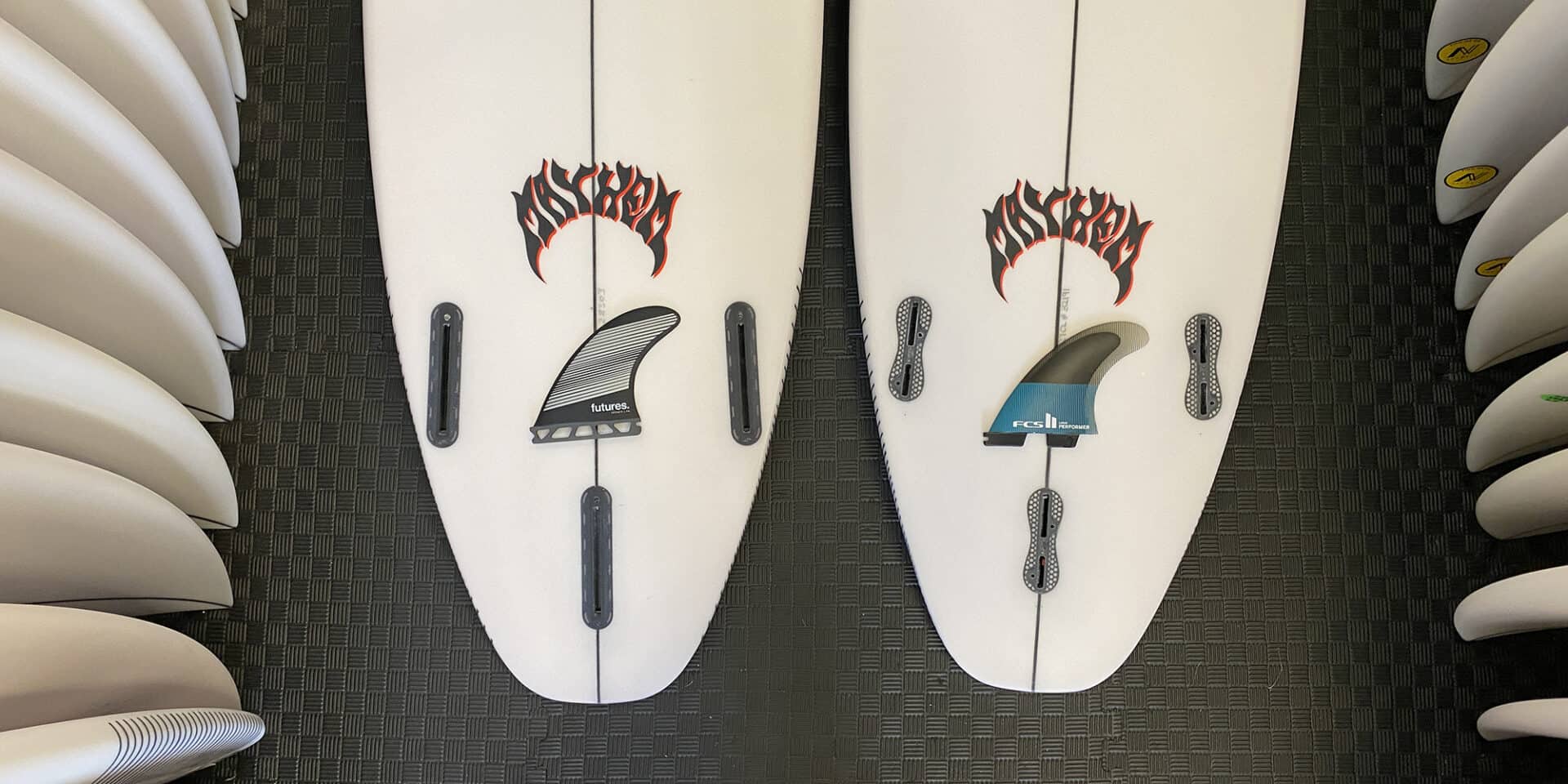
FCS I and FCS II are two generations of the same fin system. Starting with FCS I, dating back to 1992, which had a two tab system secured with screws. Then in 2013 the company came out with their revolutionary FCS II system, which allowed surfers to simply pop their fins into the box without needing any screws. (even tho they still put screw holes just incase your a nervous type). Check out our FCS range here
The big pro of this system was making it very easy to try out as many different fins without ever needing any tools.
Futures
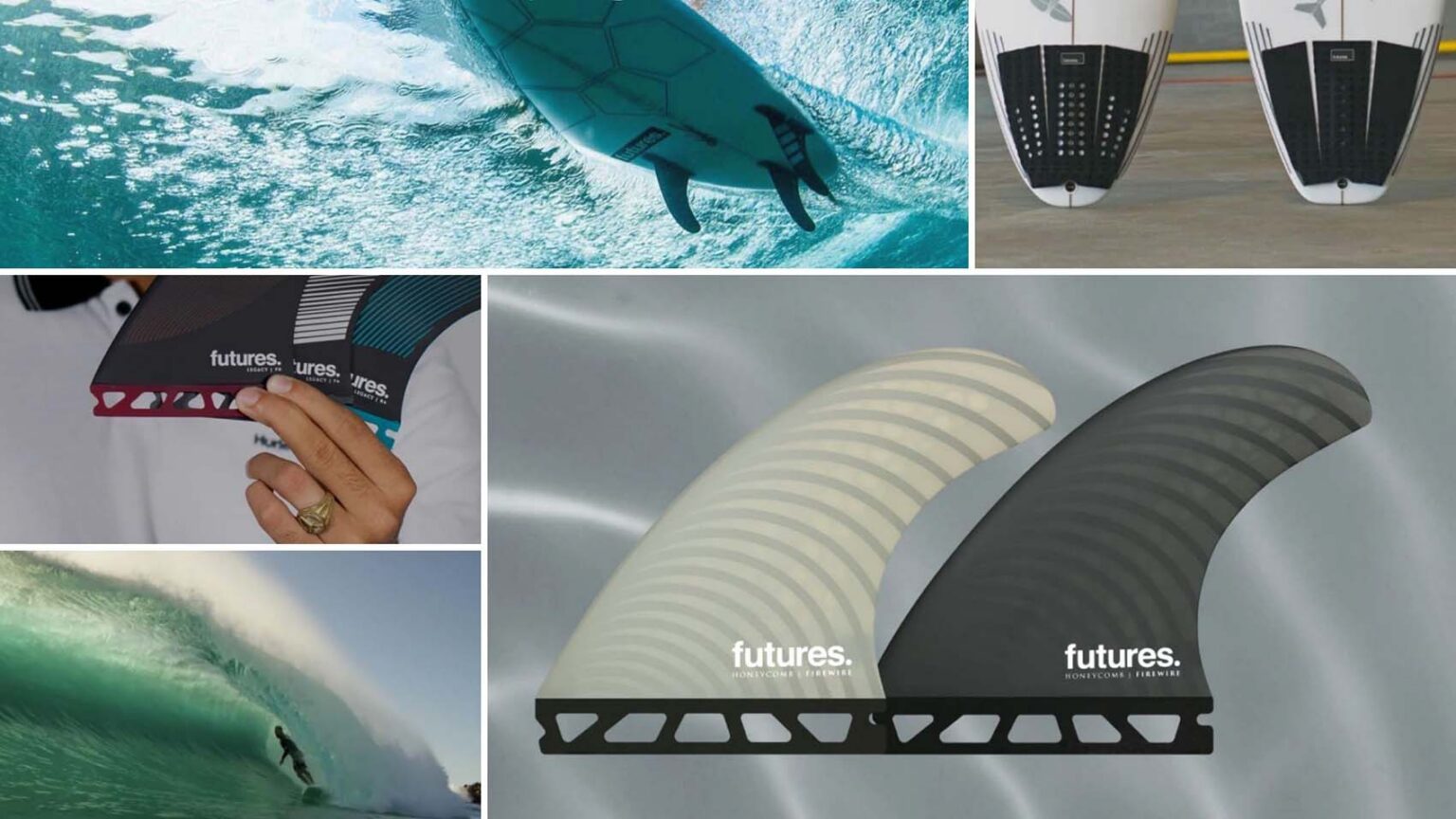
Futures fins use a single tab box system that has one screw to fasten in the fin. Originating in 1996 they’re known for their more “locked in feel”, since the full base of the fin sits into the box itself. The cool thing about Futures is the variety of fins that system comes out with. Since the camber (the angle for which the fin sits in the board) comes from the fin itself instead of how the box is glassed in (like FCS). Giving fin shapers alot more control on how their fins should react in the water. Check out our Futures range here.
Neither systems are inherently better (even though some can get pretty tribal about it). It really just comes down to what your board is built for and what you’re trying to get out of it. If all you want is the ease of popping your fins in and out with no worries of tools, then get some FCS II, or maybe you want to be more precise and have a better “locked in feel” with a variety of fin options to try, then look out for some Futures. Try as many systems as you can and see what clicks for you.
(But I am Futures ride or die Yeew)
Fin Setups: Single, Twin, Thruster, Quad, FIVE FIN!?!
Now that you know what system you have, let’s look at how many fins your board can take and the terminology of it all.
Single Fin
Single fins, as the name implies, are just a one fin setup. This is typical on longboards, logs, and some mid lengths. Typically surfed with a smooth, flowying, and stable surf style. Really built for nice trimming of the wave and noseriding. Not as great for fast power surfing.
Twin Fin
Twin fins are a two fin setup that generates a looser and more playful surf. Typical on retro style and/or fishy shaped boards. The side fins are usually bigger than side fins on a thruster. This setup’s great in small, mushier waves where you need to generate a lot more speed in or speeding down the line of a peeling point break . This is honestly my favorite setup in a board, just instant fun and happy vibes when you ride one. More and more shapers are trying to bridge the gap between twin and thruster setups to create a more performance oriented twin fin board that can handle more power surfing. So lots of cool variety in these fins.
Thruster
Thrusters are probably the most standard modern fin setup at the moment. With three fins in the board (a rear stabilizer with two side fins), it has a very balance drive, hold, and pivot to them. Allowing for top to bottom surfing and long drawn out carves. There’s a reason this has been the default for shortboards since the 80s.
Quad
Quads are a four fin setup. This removes the center fin and adds two fins per side. Quads generate lots of down the line speed and are great for punchy beach breaks. Those extra fins also create great hold for barreling steep waves as well.
5-Fin
“5-fin” boards have five separate boxes in them. This allows lots of versatility in choosing what setup you want to go for; being able to buy a thruster set or a quad. If your just buying one board and want to be flexible in your fins, a setup like this is worth checking out. Note that you’re never really putting all five fins at the same time…usually.
Everything else
Those are all the most popular and common fin setups you’ll see everywhere in the water, but there are a bunch of minor different variants between and around them. From Bonzers, to Twinsers, to quads with a little trailer. There’s a bunch that I highly recommend looking into and getting inspired to try some setups out of your comfort zone.
Size, Template, and The Scary Stuff
Sick we know what system you have and what setup your board can use. Now we can dive into some some basics of fin characteristics.
Fin size does matter 😉
Bigger fins have greater hold in bigger surf, but can feel sticky and slow in smaller mushier waves. Smaller fins are more lively, quick, and responsive, but can be too loose and slip out on bigger more powerful waves. There’s also the weight of the surfer to be considered as well.
Thankfully both FCS and Futures have a sizing chart on their site and fins that give you a good idea of what size you should get.
Here's just a basic sizing chart to start off with.
| Rider Weight | Typical Size |
|---|---|
| Under 140 lbs | Small |
| 140–175 lbs | Medium |
| 175–200 lbs | Large |
| 200+ lbs | X-Large |
Fin Anatomy 101
System and set up are checked off, now let’s dive into the fins actual shape.
The shape of a fin is what really fine tunes how it will ride in the water. Every fin really gets measured across four things, and once you get a basic gist of those four things, reading any fin specs or just picking one up will get a whole lot less confusing. (and you’ll look core being able to spew son fin lingo)
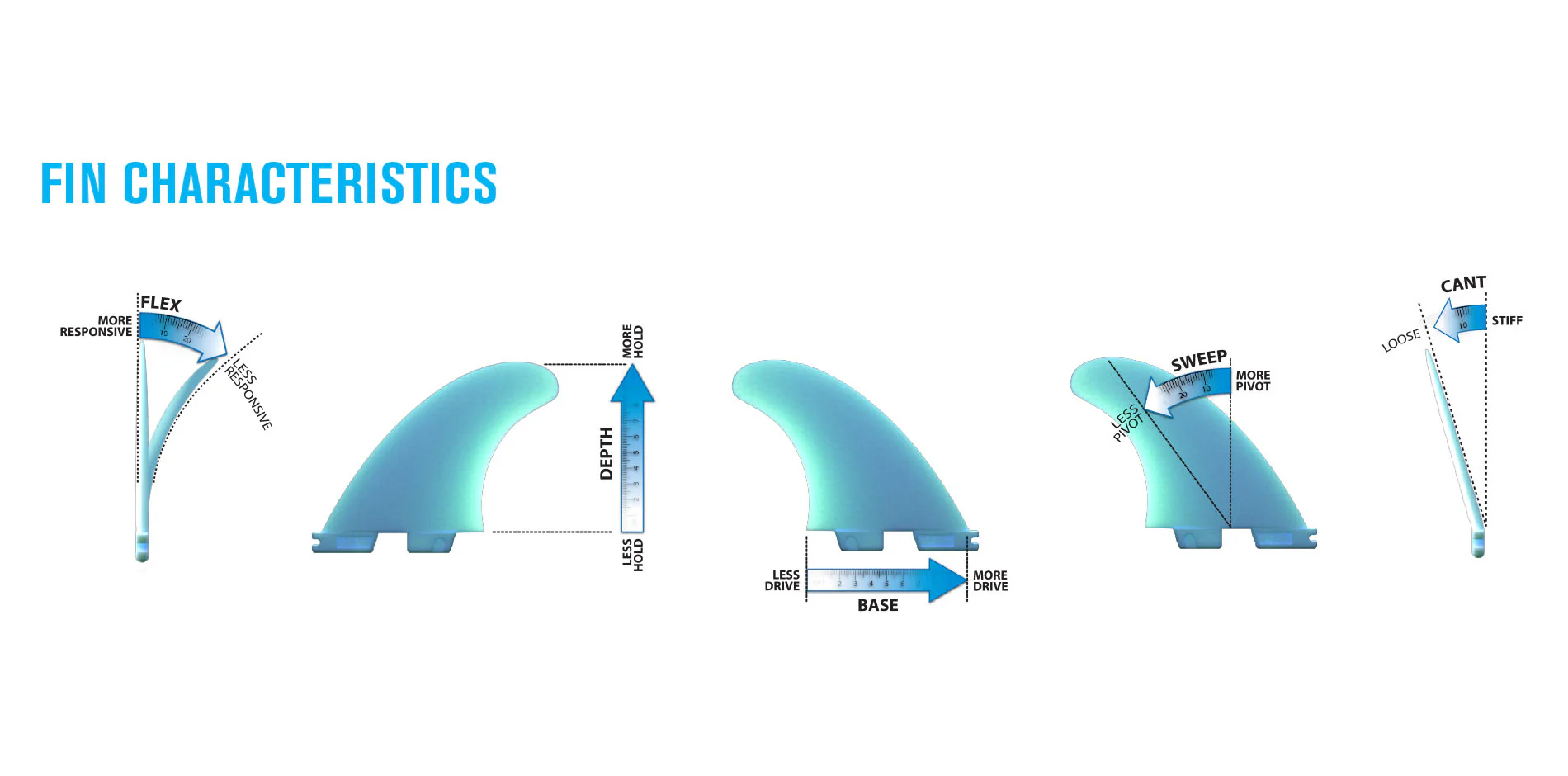
- Base — This is where the fin meets the board. The longer the base the more drive and acceleration its got
- Depth — Pretty much how far the fin sits into the water. More depth = More hold. Less depth = less hold
- Rake (or sweep) — This is how far the fin curves. More rake means longer, drawn out turns with more hold. Less rake equals tighter, snappier, top to bottom surfing
- Area — total surface area of the fin. More fin more hold. This adds to the overall drive and hold alongside with the base and depth
Foils
Foils are very important as well. The foil essentially determines how the water flows across the surface of the fin itself. This dictates the speed, hold, and release in turns. Below are diagrams of the most popular types you’ll see in a majority of fins.
Diagrams courtesy of the FCS website.



Templates
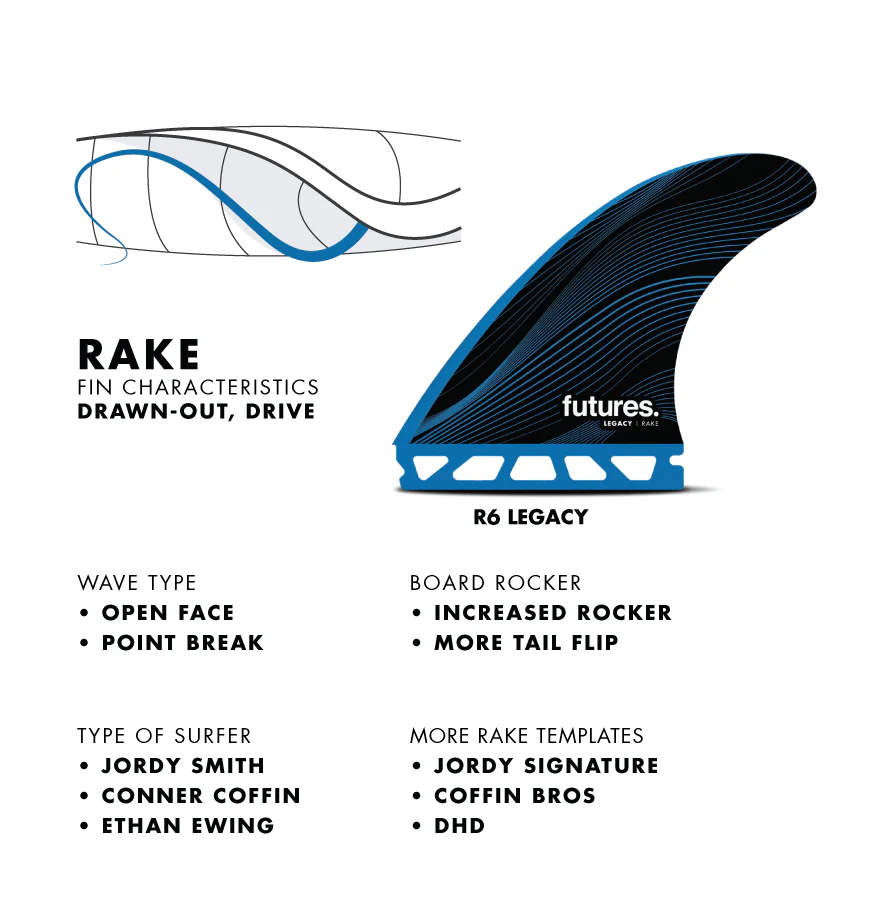
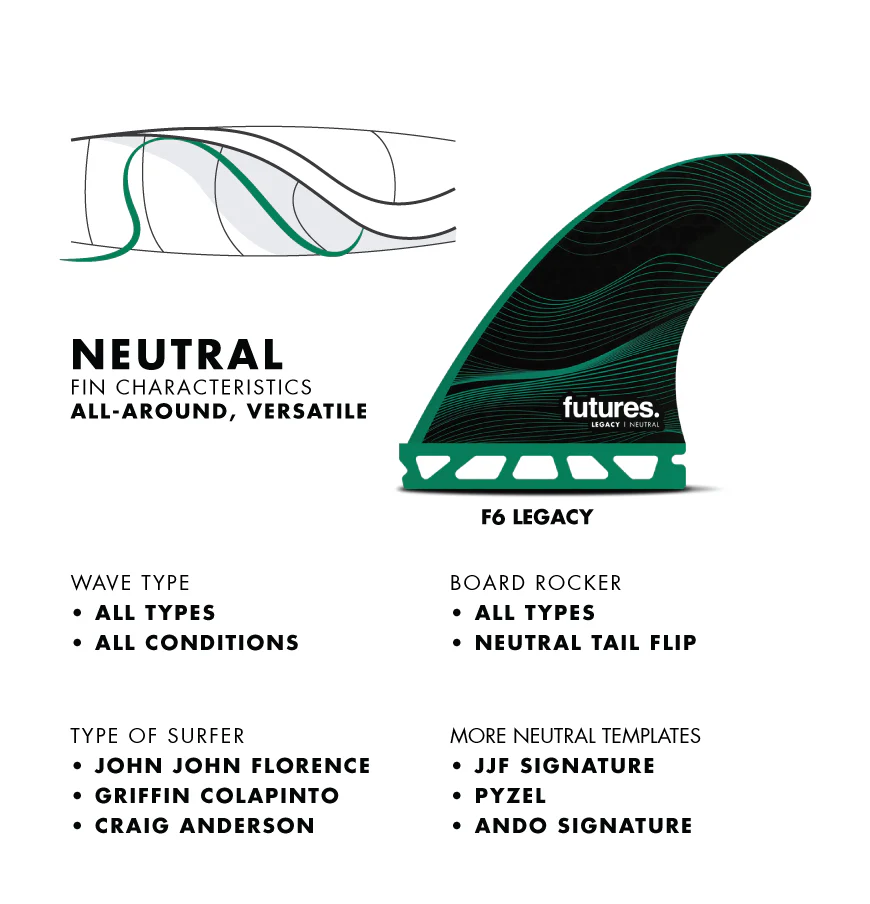
Templates are the outlines of a fin. Most templates fall into these general families:
- Raked — More sweep, drawn out turns, better hold on steep waves, and a drivey down the line feel
- Neutral — Balanced, does everything fairly decently, not too much rake, and not too much pivot. A great all around template for someone surfing a variety of waves
- Pivot — Less sweep, large base relative to the depth, made for up and down surfing and quick direction changes. Usually a bit looser and great for punchy beach breaks
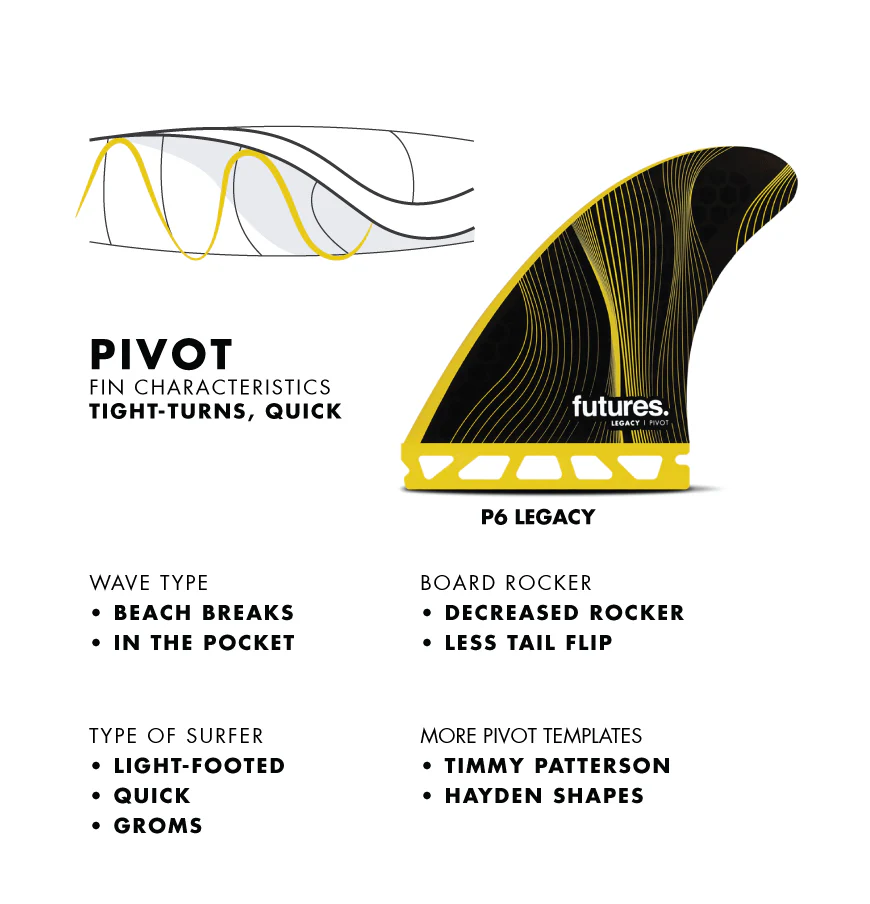
Flex and Material
Flex is responsible for how the energy is released out of your turns. The stiffer the fin, the better it holds its shape under load. Thus creating more drive, more hold, and a quicker release. On the other hand, more flex loads up and releases more gradually, making a smoother feel, and a slightly delayed characteristic. The drawback being it loses its hold on bigger more powerful waves.
(if i had a nickel every time i’ve said drive and hold i would have 19 nickels so far…)
| Material | Feel | Best For |
|---|---|---|
| Fiberglass | Stiff, responsive, durable | Solid all-around pick |
| Carbon | Very stiff, very light | Performance surfing, bigger waves |
| Honeycomb/Composite | Middle ground | Mid-range performance fins |
| Bamboo/Flex-Fiber Blends | Softer, more flex | Playful, looser surfing |
For beginners, i would stay away from any stiffer fins. I would start off with some normal soft forgiving fins to learn with. Once you’ve been catching lots of waves and ready to elevate your turn game, a mid to stiff composite will hold up to almost all conditions you’re going to be in, without punishing small mistakes. Now if you’re pushing hard through your turns and want resistance (big shot over here) then slap on the stiffest fins you can find, for that instant feedback that can hold you down on some gnarly strong waves.
Matching The Fin To The Board
Your board is the car. Your fins are the tires that get you places
- Shortboard in some punchy beach breaks —> grab a thruster or quad with medium to stiff flex
- Charging some pumping spitting barrels —> grab some strong stiff fins to hold you steady
- Surfing a fish —> slap a sick twin set in there and fly through some sections
- Longboarding —> most likely gonna have a single fin in there for max stability, trim, and jogging up to the nose.
- Foamie —> thankfully most foamies come with removable fins when you buy the board, so stick with those and you’ll be fine.
What we have in store
Thankfully here at Island Water Sports Miami, we’ve got you covered in pretty much everything you need in fins. Whether it’s FCS or Futures, Thrusters, Twin, Quads, or 5-fin, we’ve got all the setups.
The cool thing about those companies are their signature athlete and shaper models. Big names like Al Merrick, Filipe Toledo, Mick Fanning, John John Florence, Rob Machado, Kolohe Andino, and so much more all have collaborated and made fins with their liking. Even shapers have made collab fins, like Matt Biolos, Christenson, Channel Islands, and of course a lot more.
Basically if your board has a pros name on it, there’s a good chance we got a matching fin for it.
When In Doubt Give Us A Shout
Fins can easily be those things to over think and get lost in the details, hopefully after reading a bit you can ease the fog of fins. We’ve got a great selection on our site for you to check out. But then again, when in doubt just give us a shout. No need to guess, call or stop by and we’ll help you out with any questions you got. No stress.
Yeew